Products › Explosive › C-4 Plastic Explosive (Composition C-4)
🧨 C-4 Plastic Explosive (Composition C-4)
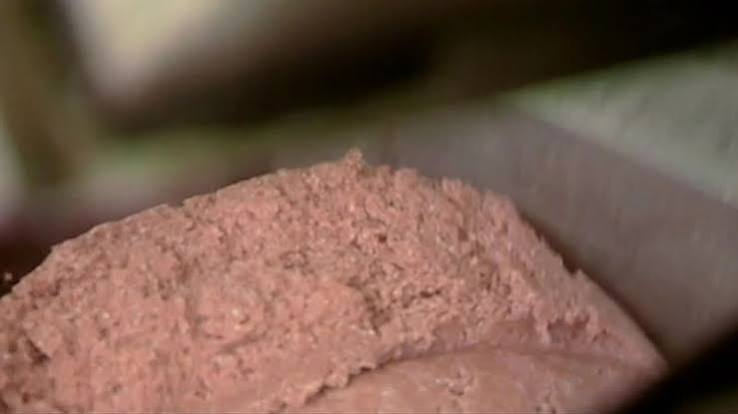
Product Introduction
Composition C-4 (commonly abbreviated as C-4) is the most widely used military plastic demolition explosive in the world. It is a putty-like malleable explosive formulation built around a high loading of RDX bound with plasticisers and a polymer matrix, giving it the unique combination of very high brisance and exceptional handling safety.
Unlike loose powder or cast explosives, C-4 can be moulded by hand into any shape needed for the demolition task — wrapped around a beam, pressed into a doorframe for breaching, formed into a shaped charge, or attached to any surface. It remains stable and workable across the extreme temperature range from arctic (−57 °C) to desert heat (+77 °C), and will only detonate when initiated by a suitable detonator or blasting cap. It cannot be set off by shock, fire, or small-arms impact.
Our C-4 is supplied to MIL-DTL-45010 specification (equivalent to US M112 Demolition Block), dyed for visual identification, and packaged in the standard 1.25 lb (568 g) rectangular block or in bulk form for authorised demolition and defence-industry customers.
Composition (by mass)
| RDX (Cyclotrimethylenetrinitramine) — primary explosive filler | 91.0 % |
| Dioctyl sebacate (plasticiser) | 5.3 % |
| Polyisobutylene (binder) | 2.1 % |
| SAE 10 motor oil / mineral oil | 1.6 % |
Physical Properties
| Appearance | Malleable putty; off-white to pale red / tan (dyed for ID) |
| Density | ~1.59 g/cm³ |
| Consistency | Plastic / mouldable at ambient temperature |
| Operating temperature range | −57 °C to +77 °C (remains workable) |
| Solubility in water | Insoluble |
| Odour | Faint motor-oil odour |
| Standard block | M112 — 1.25 lb (568 g), 11.4 × 5.1 × 2.5 cm |
Explosive Performance
| Detonation velocity | ~8092 m/s |
| Detonation pressure | ~28 GPa |
| Heat of explosion | ~6060 kJ/kg |
| TNT equivalent (blast) | 1.34 (34% more powerful than TNT by mass) |
| Brisance (Hess test) | ~19 mm compression |
Sensitivity & Safety
C-4 is renowned as one of the safest secondary explosives to handle. Its high plasticiser and binder content dramatically reduces sensitivity compared to pure RDX:
| Bullet impact | Will not detonate (may burn) |
| Open flame / fire | Burns slowly with hot flame; does not detonate |
| Drop / impact | Very low sensitivity to mechanical shock |
| Friction | Very low sensitivity to friction |
| Initiation requirement | Blasting cap or detonator (No. 6 or stronger) |
| Shelf life | 10+ years in proper storage; chemically stable |
Transport & Classification
| UN number (blocks/charges) | UN 0084 (Charges, Demolition) |
| Hazard class | 1.1D (Mass Explosion Hazard) |
| Compatibility group | D |
| Military specification | MIL-DTL-45010 (equivalent to US M112 demolition block) |
| Storage classification | Approved explosive magazine, Class 1.1 |
Applications
- Military demolition operations — breaching walls, doors, and fortifications
- Combat engineer operations — cratering, cutting, bridge and road destruction
- M112 demolition block — standard combat-engineer explosive block (1.25 lb / 568 g)
- Shaped-charge liners — anti-armour and cutting charges
- Explosive Ordnance Disposal (EOD) — render-safe procedures and counter-charges
- Special forces demolition kits — compact, high-yield charges for direct-action missions
- Underwater demolition — hull cutting, obstacle clearance (waterproof by design)
- Civilian licensed use — approved commercial demolition (building demolition, mining, quarrying)
Packaging
- Standard 1.25 lb (568 g) M112 rectangular blocks in polyethylene wrapper
- Bulk form in fibreboard drums with polyethylene liners
- Palletised for container shipping under IMDG / IATA / ADR regulations
- Storage: cool, dry, approved explosive magazine