Products › Explosive › RDX Type 1 (Cyclotrimethylenetrinitramine)
🧨 RDX Type 1 (Cyclotrimethylenetrinitramine)
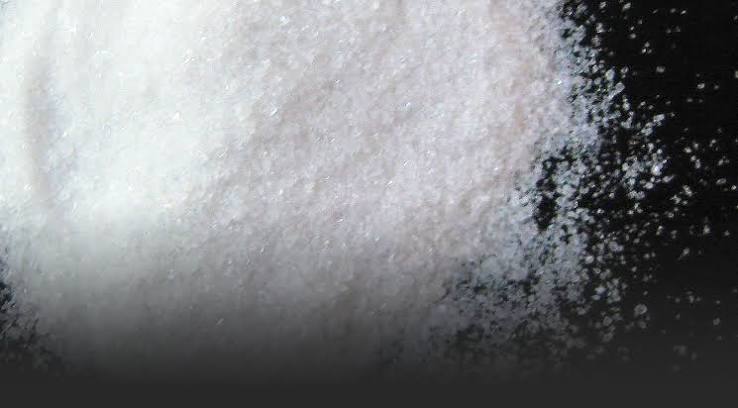
Product Introduction
RDX (Cyclotrimethylenetrinitramine, also known as Hexogen, Cyclonite, or T4) is one of the most powerful and widely used military secondary explosives. First developed in the 1890s and adopted for large-scale military use during World War II, RDX delivers roughly 1.6× the explosive energy of TNT at similar densities, making it the standard high-brisance charge for modern munitions, shaped-charge warheads, and plastic explosives.
Our Type 1 RDX is supplied as a fine white crystalline powder to MIL-DTL specification, coated with a small percentage of desensitising wax to reduce impact sensitivity for safe handling, loading, and transport. Type 1 grade is the standard fill used in Composition A-5, Composition B (RDX + TNT), Composition C-4 (plastic demolition explosive), HBX naval formulations, and shaped-charge warheads for anti-armour munitions.
RDX Product Catalogue & MSDS
The complete Material Safety Data Sheet (MSDS) and product catalogue for our RDX supply is embedded below. Contains chemical, physical, safety, handling, storage, transport, and disposal information.
Chemical Identification
| Chemical name | 1,3,5-Trinitro-1,3,5-triazinane (Cyclotrimethylenetrinitramine) |
| Common names | RDX, Hexogen, Cyclonite, T4, Hexolite |
| Molecular formula | C3H6N6O6 |
| Molecular weight | 222.12 g/mol |
| CAS number | 121-82-4 |
| Grade / Type | Type 1 (MIL-DTL specification; wax-coated / desensitised) |
| Appearance | Fine white crystalline powder |
Physical Properties
| Density (crystalline) | 1.82 g/cm³ |
| Density (pressed, typical) | ~1.77 g/cm³ |
| Melting point | 205 – 206 °C (decomposes) |
| Decomposition point | Above 213 °C |
| Solubility in water | Very low (~60 mg/L at 25 °C) |
| Solubility in organic solvents | Soluble in acetone, DMSO, cyclohexanone; insoluble in ether, ethanol |
| Vapour pressure (25 °C) | ~4 × 10⁻⁹ mmHg (extremely low) |
Explosive Performance
| Detonation velocity (at 1.77 g/cm³) | ~8750 m/s |
| Detonation velocity (at 1.65 g/cm³) | ~8180 m/s |
| Detonation pressure | ~34 GPa |
| Heat of explosion | ~5360 kJ/kg (~1280 kcal/kg) |
| Gas volume (STP) | ~908 L/kg |
| TNT equivalent | ~1.60 (60% more energetic than TNT) |
| Oxygen balance | −21.6 % (better than TNT) |
Sensitivity & Stability
Type 1 RDX is coated with wax to reduce its inherent sensitivity, making it safe to handle, press, and cast under military manufacturing conditions. It is more sensitive than TNT but far less sensitive than primary explosives, and requires a booster charge for reliable detonation.
| Impact sensitivity | ~7.5 N·m (moderate; reduced by wax coating) |
| Friction sensitivity | ~120 N (moderate) |
| Ignition temperature | ~230 °C (5 s) |
| Shelf life | Indefinite in proper storage (chemically stable) |
| Initiation | Requires blasting cap or booster charge |
Transport & Classification
| UN number (wetted, ≥15% water) | UN 0072 |
| UN number (desensitised / wax-coated) | UN 0483 |
| UN number (mixed with wax, phlegmatised) | UN 0391 |
| Hazard class | 1.1D (Mass Explosion Hazard) |
| Compatibility group | D |
Applications
- Composite explosive formulations:
- Composition A-5 — 98.5% RDX + 1.5% stearic acid (booster and lead charges)
- Composition B — 60% RDX + 40% TNT (main fill for artillery shells, mines, warheads)
- Composition C-4 — 91% RDX + 9% plasticiser (military plastic demolition explosive)
- HBX-1 / HBX-3 — RDX + TNT + aluminium + wax (naval torpedoes, depth charges)
- Torpex — 42% RDX + 40% TNT + 18% aluminium (WWII naval / underwater ordnance)
- Cyclotol — 70% RDX + 30% TNT (higher-energy shell fill than Composition B)
- Semtex — RDX + PETN + plasticiser (commercial plastic explosive)
- Shaped-charge warheads for anti-armour rockets and missiles (HEAT rounds, RPGs, ATGMs)
- Booster charges for large main-charge munitions
- Detonating cords and blasting caps (primary charge in commercial and military detonators)
- Demolition charges for military engineering
- Precision-guided munition warheads (JDAM, GBU-series, Excalibur, guided artillery)
Packaging
- Supplied in fibreboard drums or bags with polyethylene liners, wetted with water (min. 15%) or wax-coated for transport
- Typical net weight: 25 kg or 50 kg per package
- Palletised for container shipping under IMDG / IATA / ADR regulations
- Wet or phlegmatised form required for international transport