Products › Explosive › TNT (Trinitrotoluene, Military Grade)
🧨 TNT (Trinitrotoluene, Military Grade)
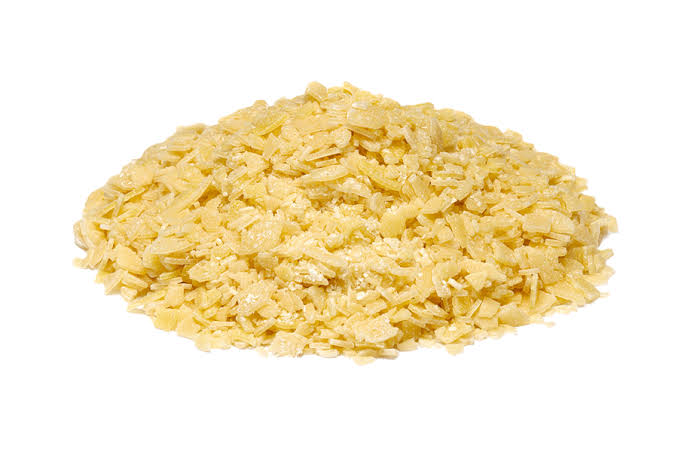
Product Introduction
TNT (Trinitrotoluene, 2,4,6-Trinitrotoluene) is one of the most widely used military explosives in the world, and the international reference standard against which the energy of all other explosives is measured (the TNT equivalent). First synthesised in 1863 and adopted for military use in the early 20th century, TNT remains a workhorse fill for artillery shells, aerial bombs, grenades, mines, demolition charges, and composite explosive formulations.
Our military-grade TNT is supplied as pale yellow crystalline flakes or granules suitable for melt-cast loading into munition bodies, or as a component in mixed formulations such as Composition B (with RDX), Tritonal (with aluminium), Amatol (with ammonium nitrate), and Pentolite (with PETN). TNT's low melting point (approx. 80 °C) and stability in the molten state make it uniquely suited to steam-jacketed melt-cast loading operations.
TNT Product Catalogue & MSDS
The complete Material Safety Data Sheet (MSDS) and product catalogue for our TNT supply is embedded below. Contains chemical, physical, safety, handling, storage, transport, and disposal information.
Chemical Identification
| Chemical name | 2,4,6-Trinitrotoluene |
| Common name / abbreviation | TNT (also “tolite”) |
| Molecular formula | C7H5N3O6 |
| Molecular weight | 227.13 g/mol |
| CAS number | 118-96-7 |
| Appearance | Pale yellow crystalline flakes / granules |
Physical Properties
| Density (crystalline) | 1.654 g/cm³ |
| Density (cast) | ~1.60 g/cm³ |
| Melting point | 80.35 °C |
| Boiling / decomposition point | Decomposes above 240 °C |
| Solubility in water | Very low (~130 mg/L at 20 °C) |
| Solubility in organic solvents | Soluble in acetone, benzene, toluene, ether |
| Vapour pressure (20 °C) | ~5.5 × 10⁻⁶ mmHg (very low) |
Explosive Performance
| Detonation velocity (cast, 1.60 g/cm³) | ~6900 m/s |
| Detonation velocity (pressed, 1.65 g/cm³) | ~7000 m/s |
| Detonation pressure | ~21 GPa |
| Heat of explosion | ~4560 kJ/kg (1090 kcal/kg) |
| Gas volume (STP) | ~730 L/kg |
| TNT equivalent | 1.00 (reference standard) |
| Oxygen balance | −74.0 % (deficient) |
Sensitivity & Stability
TNT is classified as a relatively insensitive secondary explosive, which is one of its most important operational advantages. It resists shock, friction, and impact well enough for safe handling, loading, and transport, yet detonates reliably when initiated with a suitable primary explosive booster.
| Impact sensitivity | 15 N·m (low) |
| Friction sensitivity | >353 N (very low) |
| Ignition temperature | ~475 °C (5 s) |
| Shelf life | Indefinite in proper storage; TNT is chemically very stable |
| Initiation | Requires a booster charge (e.g. tetryl, RDX, PETN) or blasting cap |
Transport & Classification
| UN number (dry, or wetted <30%) | UN 0209 |
| UN number (wetted, ≥30% water) | UN 1356 |
| Hazard class (dry) | 1.1D (Mass Explosion Hazard) |
| Hazard class (wetted) | 4.1 (Flammable Solid, wetted with water) |
| Compatibility group | D |
Applications
- Melt-cast fill for artillery projectiles, mortar bombs, aerial bombs, and grenades
- Component of composite explosives:
- Composition B — 60% RDX + 40% TNT (main charge in shells and mines)
- Amatol — TNT + ammonium nitrate (WWI/WWII bombs)
- Tritonal — 80% TNT + 20% aluminium (aerial bombs, high blast)
- Pentolite — TNT + PETN (booster charges)
- Baratol — TNT + barium nitrate (shaped-charge liners)
- Torpex — TNT + RDX + aluminium (naval torpedoes, depth charges)
- Demolition charges and military engineering blocks
- Naval mines and depth charges
- Underwater ordnance — TNT's low water solubility makes it well-suited to sea deployment
- Reference standard for benchmarking new explosive formulations (TNT equivalent)
Packaging
- Supplied in fibreboard drums or corrugated boxes with polyethylene liners
- Typical net weight: 25 kg or 50 kg per package
- Palletised for container shipping under IMDG / IATA / ADR regulations
- Wet-shipped form (≥30% water) reduces transport hazard class to 4.1