Products › Military Tourniquet › Combat Application Tourniquet
⛑️ Combat Application Tourniquet
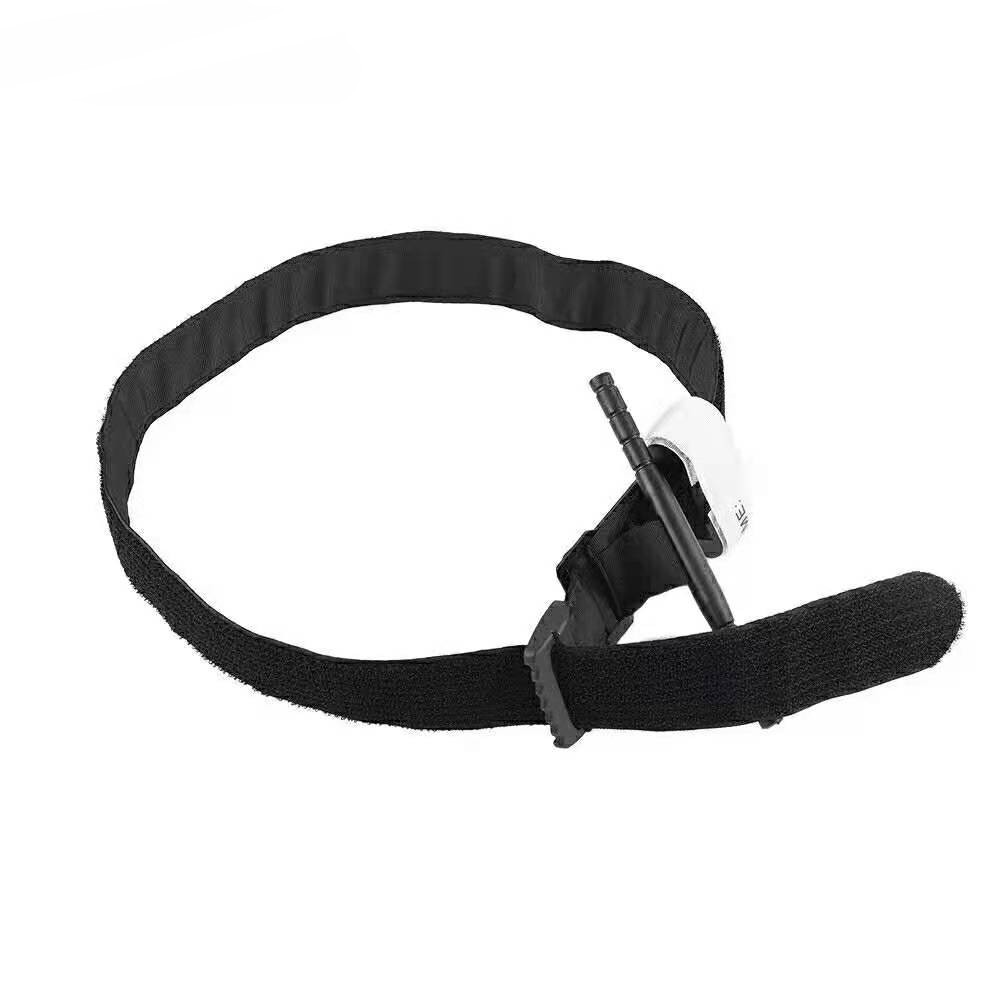
Main Features
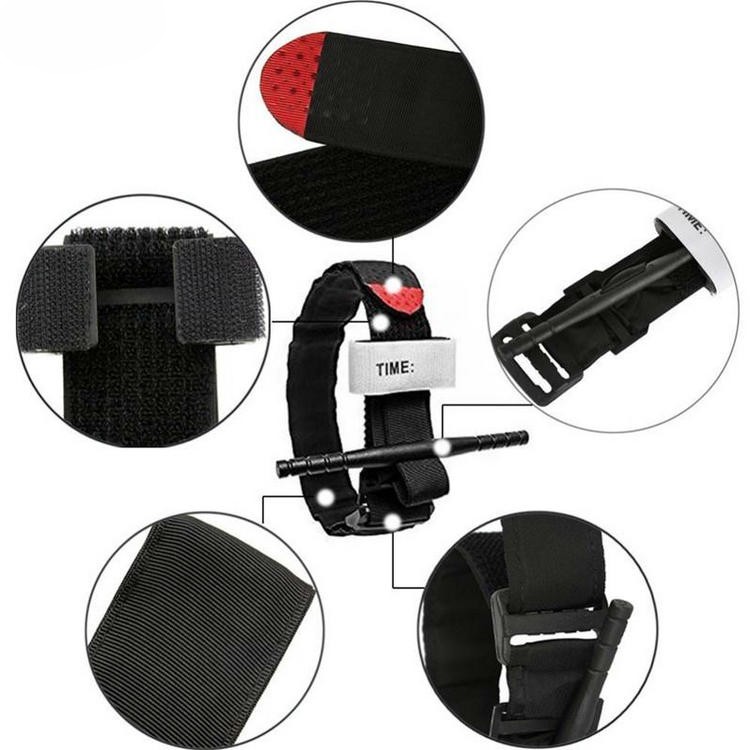
The Combat Application Tourniquet utilises a durable windlass system with a free-moving internal band providing true circumferential pressure to the extremity. Its unique dual securing system avoids the use of screws and clips which can become difficult to operate under survival stress or where fine motor skills are compromised.
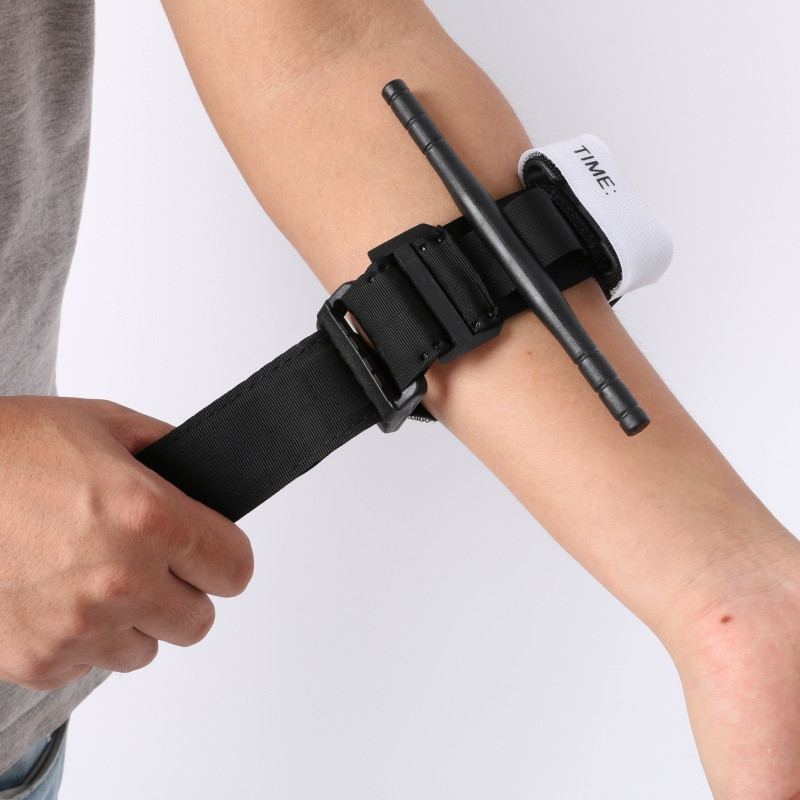
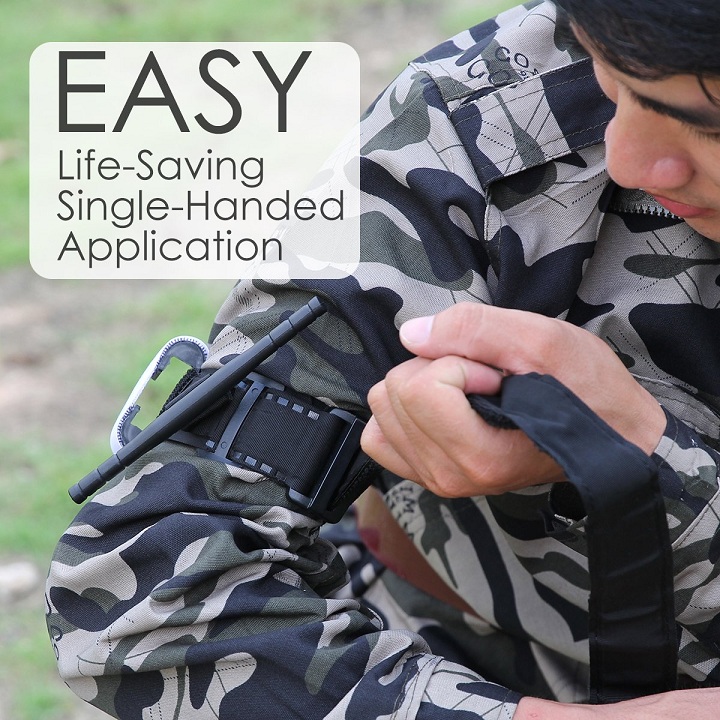
- High-quality tactical tourniquet, well designed for one-handed operation — even when travelling alone and unexpectedly injured, the wearer can self-apply it without assistance.
- Rapid deployment — supports fast use to stop haemorrhaging and save lives in the critical moments after injury. Suitable for both military first-aid kits and civilian outdoor exploration or household emergency kits.
- Fits most users — adjustable webbing accommodates a wide range of limb sizes (stretched length approximately 96 cm × 4 cm).
- Easy to carry — quick-release design; lightweight and compact so it adds no bulk to a backpack or IFAK.
Product Gallery
Technical Specifications
| Product type | Tactical windlass tourniquet |
| Operation | Single-handed self-application |
| Securing system | Dual securing system (no screws, no clips) |
| Material | Nylon + Plastic (durable, moisture-resistant) |
| Unfolded length | Approx. 95 cm × 4 cm |
| Stretched length | Approx. 96 cm × 4 cm |
| Folded size | Approx. 16 × 6 × 4 cm |
| Package contents | 1 × Tactical Tourniquet, 1 × User Manual |
| Storage | Store in a cool, dry place |
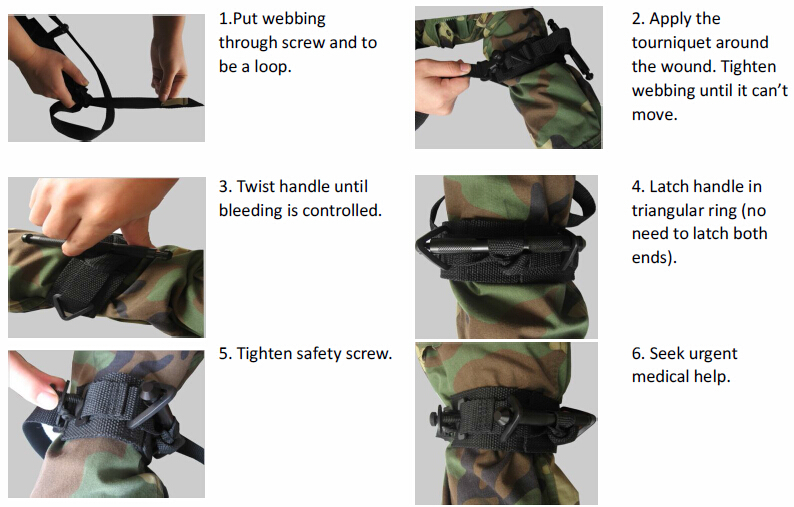
How to Use — 6-Step Application
- Put webbing through screw and form it into a loop.
- Apply the tourniquet around the wound. Tighten the webbing until it can no longer move.
- Twist the handle (windlass rod) until bleeding is controlled.
- Latch the handle in the triangular ring (no need to latch both ends).
- Tighten the safety screw to secure the windlass position.
- Seek urgent medical help.
⚠ Contraindications & Safety Notes
Contraindications
Do not use on patients with vasculitis, phlebitis, or venous thrombosis.
Important Application Notes
- The tourniquet must not be applied for extended periods without release intervals.
- In winter conditions: release every 20 minutes for 1–2 minutes, then re-tighten.
- In summer / warm conditions: release every 2 minutes for 1–2 minutes, then re-tighten.
- When re-tightening, shift the application site slightly up or down to prevent long-term ischaemic damage or necrosis of the limb extremity.
- For patients with major bleeding, transport to hospital as soon as possible while the tourniquet remains in place on the proximal (upper) end of the injured limb.
Note: Tourniquets are medical devices. Users should receive proper training (e.g. TCCC / Tactical Combat Casualty Care) before field application.
Applications
- Military IFAK (Individual First Aid Kit) — standard-issue haemorrhage control device for armed forces personnel
- Law enforcement — police tactical teams, SWAT operators, active-shooter response kits
- Tactical medics & combat corpsmen — pre-hospital haemorrhage control
- Emergency services — EMS, fire rescue, wilderness search-and-rescue teams
- Outdoor & adventure — hunting, mountaineering, remote-area expeditions
- Home emergency preparedness — household first-aid kits